
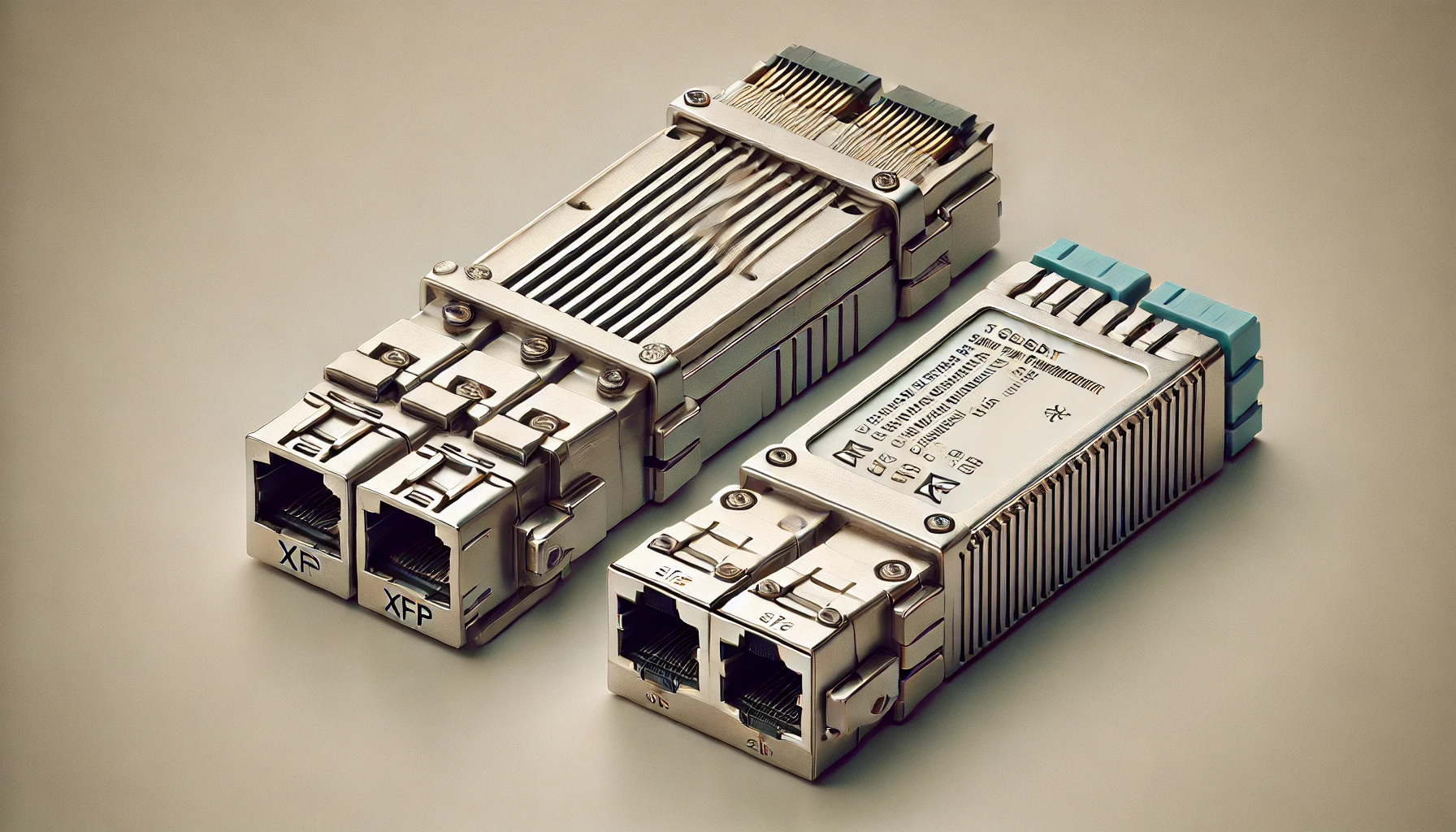
10G SFP+ optics has a smaller footprint than the XFP modules, which can also enable greater port density. That is because SFP+ transceivers leave more circuitry to be implemented on the motherboard instead of its inside — it moves some functions to the motherboard, including signal modulation function, MAC, CDR and EDC. Moreover, XFP technology is relatively older but more expensive, that's also the reason 10G SFP+ modules have been gaining more market share.
| Optical Type | XFP | SFP+ |
|---|---|---|
| Standard | IEEE802.3ae; XFP MSA | IEEE802.3ae; SFP-8431; SFP-8432 |
| Push Time | 2002 | 2006 |
| Size | Bigger | Smaller |
| Data Rate | 6Gbps; 8.5 Gbps; 10 Gbps | 6Gbps; 8.5 Gbps; 10 Gbps |
| Wavelength | 850nm; 1310nm; 1550nm; CWDM; DWDM; BIDI; Tunable; Copper |
850nm; 1310nm; 1550nm; CWDM; DWDM; BIDI; Tunable; Copper |
| Fiber Type | OM3; OM4; OS1; OS2 | OM3; OM4; OS1; OS2 |
| Typical Connector | LC | LC |
| Max Distance | 120km | 120km |
| Cost | Higer | Lower |